Understanding Cat Body Language
Learn to understand cat body language. Decode your cat's signals for better communication.
Learn to understand cat body language. Decode your cat's signals for better communication. Ever wonder what your feline friend is really trying to tell you? Cats are masters of subtle communication, and by learning to interpret their body language, you can build a stronger bond, prevent misunderstandings, and even spot potential health issues early. It's like unlocking a secret language, and trust us, it's incredibly rewarding!
Understanding Cat Body Language A Comprehensive Guide
Cats communicate through a fascinating array of subtle cues, from the twitch of a tail to the blink of an eye. Unlike dogs, whose signals can often be more overt, feline communication is nuanced and requires a keen observer. By delving into the world of cat body language, you'll gain invaluable insights into your pet's emotional state, intentions, and overall well-being. This comprehensive guide will break down the key components of cat communication, helping you become a true cat whisperer.
The Expressive Tail Decoding Feline Tail Wags and Positions
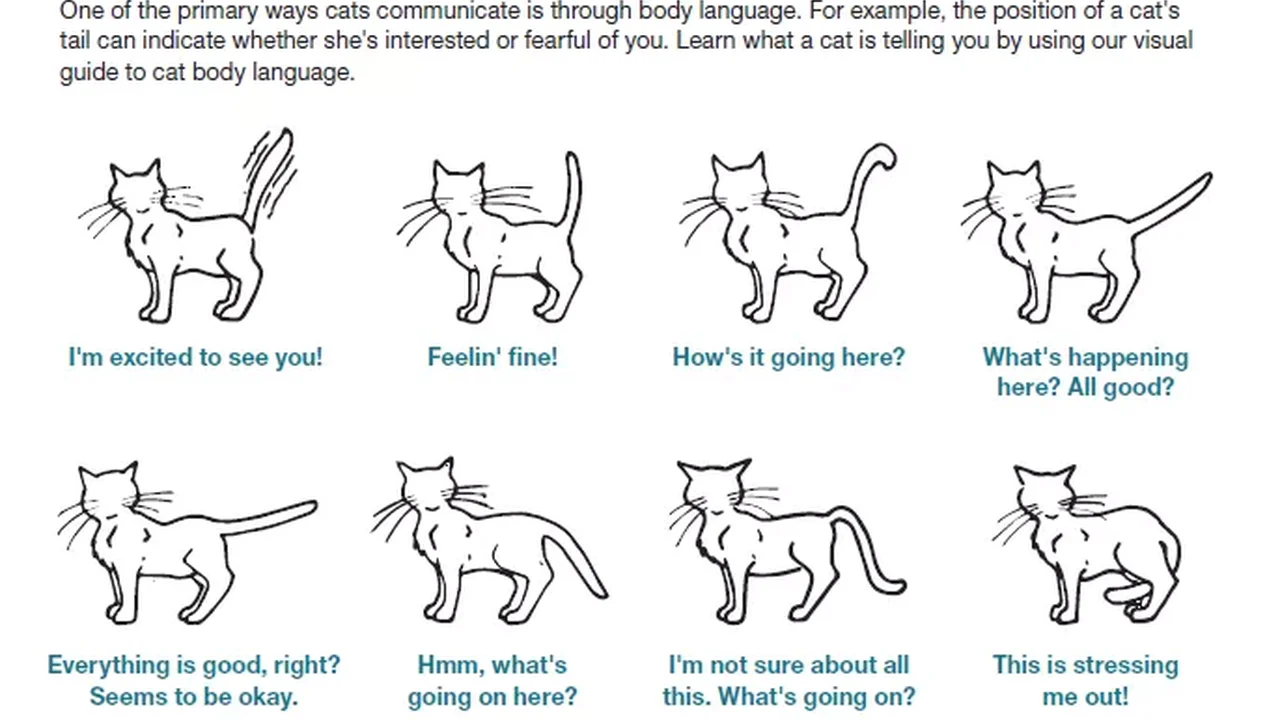
A cat's tail is arguably its most expressive appendage, acting as a dynamic barometer of its mood. Understanding its various positions and movements is crucial for deciphering what your cat is feeling.
- Tail Held High and Quivering: This is a sign of extreme happiness and confidence. Your cat is likely thrilled to see you and is feeling affectionate. Think of it as a friendly greeting, similar to a dog's enthusiastic tail wag.
- Tail Held High with a Slight Curl at the Tip: A relaxed and content cat. They are feeling secure and approachable. This is a good time for interaction and petting.
- Tail Held Straight Out Behind: Often seen when a cat is walking or exploring. It indicates a neutral, curious, and alert state. They are observing their surroundings.
- Tail Tucked Between Legs: A clear sign of fear, submission, or anxiety. Your cat feels threatened and is trying to make itself appear smaller and less noticeable. Approach with caution and reassurance.
- Tail Lashing or Thumping: This is a warning sign of irritation, anger, or agitation. The faster and harder the lashing, the more upset your cat is. It's best to give them space when you see this.
- Tail Puffed Up Like a Bottle Brush: An unmistakable sign of extreme fear or aggression. The cat is trying to appear larger and more intimidating to a perceived threat. This is often accompanied by an arched back and hissing.
- Tail Wrapped Around Itself or Another Cat: A sign of affection, comfort, and security. When wrapped around you, it's a loving gesture.
- Slow Tail Wag or Swish: This can indicate a cat is contemplating something, perhaps hunting or deciding on a course of action. It's a sign of focused attention.
The Telling Ears What Your Cat's Ear Positions Reveal
A cat's ears are incredibly mobile and provide a wealth of information about their emotional state and focus. Pay close attention to their direction and posture.
- Ears Forward and Upright: This indicates alertness, curiosity, and engagement. Your cat is interested in what's happening around them.
- Ears Swiveling Independently: Your cat is actively listening and trying to pinpoint the source of a sound. They are highly attentive to their environment.
- Ears Flattened Back Against the Head (Airplane Ears): A strong indicator of fear, aggression, or defensiveness. Your cat is trying to protect its ears from a potential attack and is feeling threatened. This often precedes a hiss or a swat.
- Ears Slightly Tilted Sideways: Can indicate mild irritation or a cat that is feeling a bit unsure or anxious.
- Ears Twitching: Often a sign of mild irritation or annoyance, especially if accompanied by a slight tail twitch.
The Expressive Eyes Unveiling Feline Emotions Through Gaze and Pupils
The eyes are windows to the soul, and for cats, they offer profound insights into their feelings. Pupil dilation and blinking patterns are particularly telling.
- Slow Blink: This is the ultimate sign of trust and affection, often referred to as a 'cat kiss.' If your cat slow blinks at you, try slow blinking back to reciprocate the affection.
- Direct Stare (Unblinking): In the cat world, a direct, unblinking stare can be a challenge or a sign of dominance. If a cat stares at you this way, it might be asserting itself or feeling threatened. Avoid staring back intensely.
- Dilated Pupils (Large and Round): Can indicate fear, excitement, or aggression. In a dark room, it's normal for pupils to dilate to let in more light. However, in a well-lit room, dilated pupils suggest heightened emotion.
- Constricted Pupils (Slit-like): Often a sign of aggression, anger, or intense focus, especially in bright light. It can also indicate pain.
- Half-Closed Eyes: A sign of relaxation and contentment. Your cat is feeling safe and comfortable.
The Body Posture and Fur What Your Cat's Overall Stance Says
Beyond individual features, a cat's entire body posture and the state of its fur provide a holistic view of its emotional state.
- Arched Back and Puffed Fur: A classic defensive posture, indicating extreme fear or aggression. The cat is trying to appear larger and more threatening.
- Crouched Low to the Ground: Can indicate fear, readiness to pounce (hunting), or a cat trying to hide. Context is key here.
- Rolling on Their Back Exposing Belly: While often seen as an invitation for a belly rub, it's primarily a sign of extreme trust and vulnerability. However, it's not always an invitation to touch! Many cats will swat if you go for the belly. It's more about showing they feel safe with you.
- Stretching: A sign of relaxation and comfort, often after waking up.
- Rubbing Against You (Bunting): A strong sign of affection and marking you with their scent glands. They are claiming you as part of their family.
- Kneading (Making Biscuits): A leftover behavior from kittenhood when they kneaded their mother for milk. It's a sign of extreme contentment, comfort, and happiness.
- Hiding: A cat that is hiding is likely feeling scared, stressed, or unwell.
Vocalizations The Meows Hisses and Purrs of Feline Communication
While body language is primary, cat vocalizations add another layer of communication. Each sound carries a specific meaning.
- Meow: Interestingly, adult cats primarily meow to humans, not other cats. The tone and frequency vary widely. A short, high-pitched meow might be a greeting, while a long, drawn-out meow could indicate a demand or complaint.
- Purr: Generally a sign of contentment and happiness. However, cats can also purr when they are injured or stressed, as a self-soothing mechanism. Pay attention to other body language cues to understand the context.
- Hiss: An unmistakable warning sign of fear, anger, or aggression. It means 'stay away!'
- Growl: Similar to a hiss, a growl indicates aggression and a readiness to defend themselves.
- Chirp or Trill: Often used by mothers to call their kittens, or by cats to get your attention or express excitement, especially when observing prey.
- Yowl or Howl: A loud, prolonged vocalization that can indicate distress, pain, territorial disputes, or a female cat in heat.
Common Misunderstandings Bridging the Communication Gap
Many human-cat misunderstandings stem from misinterpreting feline signals. Here are a few common ones:
- The Belly Rub Trap: As mentioned, a cat exposing its belly is a sign of trust, not always an invitation for a rub. Proceed with caution, and if they swat, respect their boundaries.
- Staring: While we might stare to show affection, a direct, unblinking stare can be perceived as a threat by a cat.
- Ignoring Signals: If your cat is lashing its tail or flattening its ears, they are telling you they are unhappy. Ignoring these signals can lead to a scratch or bite.
Enhancing Communication Tools and Products for Better Understanding
While understanding body language is key, certain products can help enhance communication and address behavioral issues that stem from misunderstandings or stress. These aren't substitutes for observation but can be valuable aids.
Feliway Classic Diffuser and Spray Calming Pheromones for Cats
Description: Feliway Classic uses synthetic feline facial pheromones, which cats naturally release to mark their territory as safe and secure. When diffused into the air or sprayed on surfaces, it helps create a calming environment, reducing stress-related behaviors like spraying, scratching, and hiding. It's particularly useful during changes in routine, new pets, or travel.
Usage Scenarios: Ideal for multi-cat households to reduce tension, during introductions of new pets, when moving to a new home, during vet visits (spray in carrier), or for cats exhibiting anxiety. The diffuser covers an area of up to 700 sq ft.
Comparison: There are other pheromone products, but Feliway is the most widely researched and veterinarian-recommended brand. Its effectiveness is generally high for stress-related issues. Some competitors offer similar products at slightly lower price points, but Feliway's reputation for efficacy is strong.
Price: A Feliway Classic Diffuser Starter Kit (diffuser + refill) typically ranges from $25-$35 USD. Refills usually cost $18-$25 USD. The spray is often around $20-$30 USD.
PetSafe SSSCAT Spray Deterrent Training Aid
Description: This motion-activated spray deterrent uses a harmless burst of air to discourage cats from going into off-limits areas. It's a humane way to teach boundaries without direct confrontation, which can often be misinterpreted by cats.
Usage Scenarios: Perfect for keeping cats off countertops, furniture, out of specific rooms, or away from plants. It helps reinforce 'no-go' zones without you having to constantly intervene, which can stress both you and your cat.
Comparison: While other motion-activated deterrents exist, the SSSCAT is known for its reliability and adjustable spray sensitivity. Some alternatives use ultrasonic sounds, which can be less effective or even irritating to some cats. The air spray is generally well-tolerated and effective.
Price: The PetSafe SSSCAT Spray Deterrent typically costs between $30-$45 USD. Refill cans are usually $10-$15 USD.
Jackson Galaxy Cat Scratching Posts and Trees Durable and Engaging
Description: Jackson Galaxy, a renowned cat behaviorist, designs scratching posts and trees that cater to a cat's natural instincts. These products are often tall, sturdy, and made with durable materials like sisal, providing appropriate outlets for scratching and climbing, which are crucial for a cat's physical and mental well-being.
Usage Scenarios: Essential for every cat household to prevent destructive scratching on furniture. Placing them in prominent areas where your cat likes to stretch and mark territory encourages appropriate scratching behavior. Multi-level trees also provide vertical space, which is important for cats to feel secure and observe their surroundings.
Comparison: Many scratching posts are available, but Jackson Galaxy's products often stand out for their quality, stability, and understanding of cat behavior. Cheaper alternatives might be flimsy or use less appealing materials, leading cats to ignore them in favor of your sofa. Investing in a good quality scratcher can save your furniture and keep your cat happy.
Price: Prices vary widely depending on size and complexity. A basic Jackson Galaxy scratching post might be $30-$60 USD, while a multi-level cat tree can range from $100-$300+ USD.
Interactive Cat Toys Laser Pointers and Wand Toys for Play and Bonding
Description: Interactive toys like laser pointers (used responsibly) and wand toys stimulate a cat's predatory instincts, providing essential exercise and mental stimulation. They also offer a fantastic opportunity for bonding between you and your cat.
Usage Scenarios: Daily play sessions are crucial for a cat's physical and mental health. Wand toys allow for direct interaction, mimicking prey movement. Laser pointers should always end with a tangible reward (like a treat or a physical toy) to prevent frustration from never 'catching' the dot.
Comparison: The market is flooded with cat toys. Look for durable wand toys with various attachments (feathers, ribbons) to keep things interesting. For laser pointers, ensure they are pet-safe and avoid shining them directly into your cat's eyes. Automatic laser toys can be good for independent play but shouldn't replace human interaction.
Price: Simple wand toys can be as little as $5-$15 USD. Quality laser pointers are often $10-$25 USD. Automatic interactive toys can range from $20-$60 USD.
SureFeed Microchip Pet Feeder Preventing Food Theft in Multi-Cat Homes
Description: This smart feeder only opens for the designated pet's microchip or RFID collar tag, ensuring that each cat eats only its own food. This is invaluable in multi-cat households where one cat might be on a special diet, or if one cat is prone to stealing food from others.
Usage Scenarios: Essential for managing weight, administering medication through food, or ensuring that shy cats get enough to eat without being bullied by more dominant felines. It reduces stress around feeding times.
Comparison: While there are other automatic feeders, the microchip recognition feature of SureFeed is a standout. Other feeders might be timer-based but don't prevent food theft between pets. This specific functionality makes it a premium solution for specific multi-cat challenges.
Price: The SureFeed Microchip Pet Feeder is a significant investment, typically costing between $120-$180 USD.
The Art of Observation Becoming a Cat Behavior Expert
Becoming proficient in cat body language is an ongoing process that requires patience and keen observation. Spend time simply watching your cat without interacting. Notice the subtle shifts in their ears, the flick of their tail, the dilation of their pupils. Over time, you'll start to recognize patterns and understand your cat's unique communication style.
Remember that context is everything. A puffed tail in the presence of a strange dog means something different than a puffed tail during playful interaction with a toy. Always consider the surrounding environment and recent events when interpreting your cat's signals.
By actively engaging with your cat's body language, you're not just understanding them better; you're also showing them that you care and are responsive to their needs. This deepens your bond and fosters a relationship built on mutual respect and understanding. So go ahead, start observing, and unlock the fascinating world of feline communication!
:max_bytes(150000):strip_icc()/277019-baked-pork-chops-with-cream-of-mushroom-soup-DDMFS-beauty-4x3-BG-7505-5762b731cf30447d9cbbbbbf387beafa.jpg)